Can you become a private investigator in Florida without prior police experience? The short answer is yes — but first you must satisfy specific florida private investigator background check requirements designed to protect the public and preserve trust in the industry. For career changers, recent graduates, and security professionals eyeing a PI career in the Sunshine State, understanding how fingerprinting, criminal-history screening, training, bonding, and verification of experience fit together is the essential first step.
- Minimum age and character: 18+, good moral character required.
- Fingerprint background check: State and federal checks via submitted fingerprints.
- Training or experience: 40 hours FDACS-approved training or verifiable experience.
- Class ‘C’ license: Typically requires two years of full-time verifiable experience.
- Bonding/insurance & renewal: Surety bond or insurance required; renew every two years with continuing education.
What the Florida Private Investigator Background Check Requirements Are
florida private investigator background check requirements center on identity verification, criminal-history screening, and proof of trustworthy conduct. The state requires applicants to submit fingerprints so the Department can run both state and federal checks. Applicants must be at least 18 years old and demonstrate good moral character with no disqualifying convictions (for more detail see Jimerson Birr).
Key legal and administrative steps
- Submit a completed license application to the Florida authority handling PI licensing.
- Provide a full set of fingerprints for state and national criminal database checks.
- Show proof of required training or equivalent experience and any required bonds or insurance.
How Fingerprinting and Background Screening Work for Florida PIs
Fingerprinting is the backbone of the florida private investigator background check requirements. Think of it like a comprehensive ID and history check that employers run when hiring for sensitive roles. Florida forwards submitted fingerprints to national databases to identify criminal records and disqualifying offenses. This step is mandatory for all applicants and typically happens early in the licensing timeline to avoid investing in training before eligibility is confirmed (source).
What disqualifies an applicant?
- Felony convictions or certain serious misdemeanors related to dishonesty or violence can disqualify.
- Ongoing criminal charges or unresolved cases can delay or block licensure.
- Applicants usually have an opportunity to explain or provide context for older or minor offenses.
Training, Experience, and the Class ‘C’ Pathway
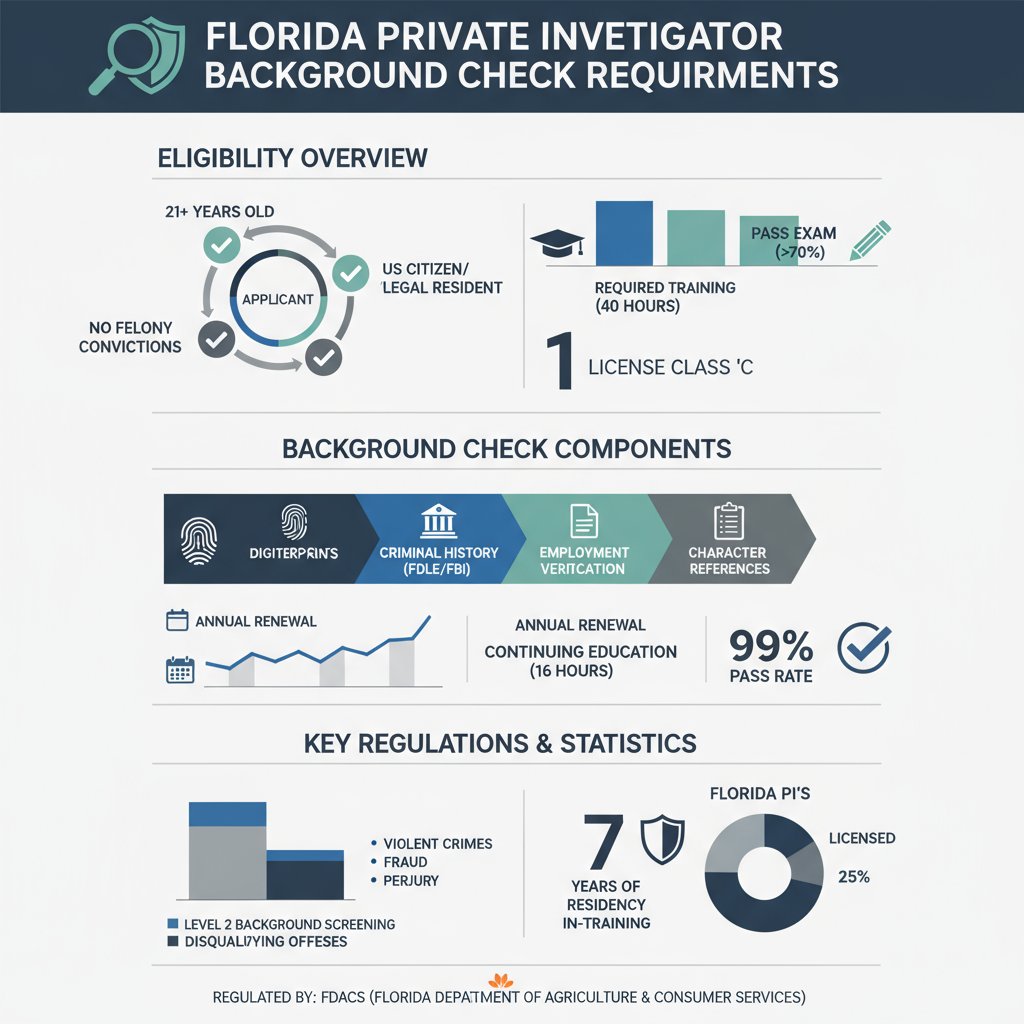
Background checks are only one part of the process. The state requires either formal training or verifiable experience. The minimum is a 40-hour course from an FDACS-approved provider or documented investigative experience, which makes the field accessible to non-law-enforcement entrants.
Two common routes for new entrants
- Training-first route: Complete a 40-hour FDACS-approved course (for example, programs like the HCC Private Investigator Intern course). After training and passing the background check, you can pursue licensing or an intern license.
- Experience-first route (Class ‘C’): To obtain a Class ‘C’ Private Investigator License applicants must show two years of lawfully gained, verifiable, full-time experience. Experience can include internships, investigative work in related fields, military service, or approved college coursework in limited amounts (FALI).
Both routes require the background check; the Class ‘C’ pathway emphasizes demonstrated competence and responsibility, which background checks help verify.
Practical Tips for Career-Changers and Aspiring Florida PIs
If you’re coming from security, customer service, or a non-law-enforcement background, the florida private investigator background check requirements are structured to be achievable with planning:
- Start with training: A 40-hour FDACS-approved course can fast-track eligibility and teach core skills while preparing fingerprints.
- Document experience: Keep detailed records of any investigative tasks, internships, or related job duties to support a Class ‘C’ application.
- Address past issues proactively: If you have prior convictions, collect court documents and character references; transparency helps during review.
- Budget for bonding and insurance: Most applicants must secure a surety bond or insurance before licensure.
Example: A recent college graduate completed the 40-hour course, submitted fingerprints, and worked a six-month internship under a licensed agency. The combined training and internship satisfied the experience requirements for an intern license while passing the background check allowed them to begin client work under supervision.
How Background Requirements Shape Career and Renewal
The background check isn’t a one-time gate; it supports ongoing regulation. Florida requires license renewal every two years along with continuing education (14 hours) and proof of insurance or bonding to maintain licensure. That means maintaining a clean record and completing regular education to stay current—important for career stability and credibility in the marketplace.
Common misconceptions
- “You must be ex-law enforcement”: Not true. Non-police applicants are eligible if they meet training or experience rules.
- “Any minor past offense is an automatic disqualifier”: Not always—context, age of the offense, and rehabilitation matter.
Understanding and meeting the florida private investigator background check requirements makes the licensing path clearer and achievable for motivated career-changers.
Next Steps for Aspiring Florida Private Investigators
Start by enrolling in an FDACS-approved 40-hour course or lining up verifiable experience that meets Class ‘C’ criteria. Arrange fingerprinting early and gather paperwork for bonding/insurance. For specifics on the statutory requirements and application forms, review guidance from legal and industry resources such as Jimerson Birr and the Florida Association of Licensed Investigators. Educational programs like the HCC Private Investigator course are practical starting points.
Final takeaway: The florida private investigator background check requirements are strict but transparent. With proper training, documented experience, and clean background checks, non-law-enforcement candidates can build a credible, stable PI career in Florida. Begin with fingerprinting and a 40-hour FDACS-approved course, and plan for bonding, renewal, and continuing education as part of a long-term professional strategy.