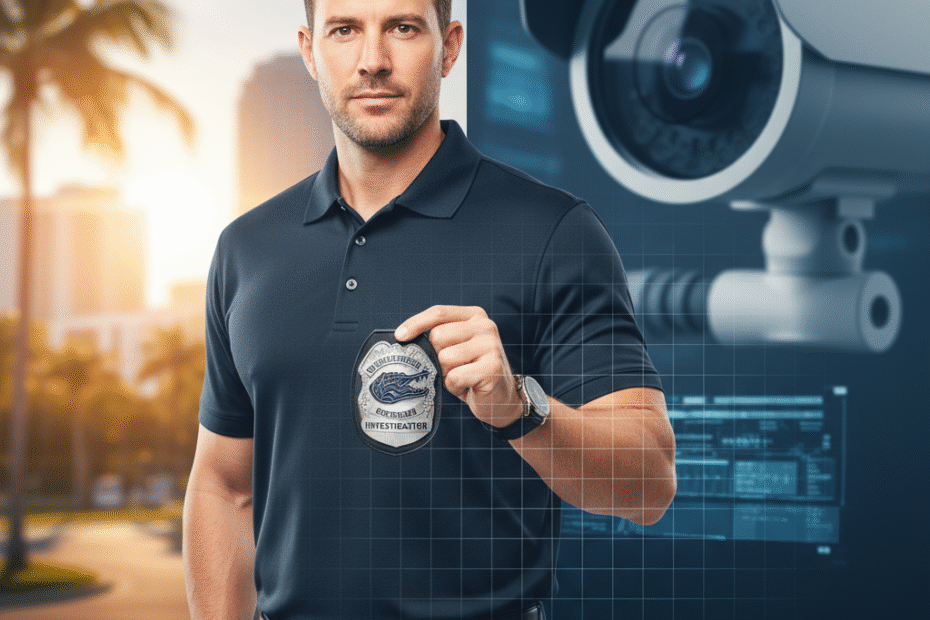
Can you become a licensed private investigator in Florida with security experience? Yes — Florida’s licensing rules explicitly allow professionals with verified security or investigative work to qualify for a Class C Private Investigator license without prior police service. For career changers and security officers seeking independence, flexibility, and entrepreneurship, this pathway turns hands-on security experience into a legal, regulated PI career in Florida.
- Minimums: Age 18, good moral character, no disqualifying criminal history.
- Experience: Two years of lawful, full-time investigative or security work can qualify for Class C.
- Exam & paperwork: Pass the Florida PI exam, submit fingerprints, proof of training/experience, and a $10,000 surety bond.
- Ongoing: Renewal every two years and 14 hours of continuing education are required.
- Sources: FDACS rules summarized by legal and industry resources below for accuracy.
What Does It Mean to Become a Licensed Private Investigator in Florida with Security Experience?
To become a licensed private investigator in Florida with security experience means using verified, full-time work in security or investigative roles to meet the experience component of Florida’s Class C licensing requirements. The Florida Department of Agriculture and Consumer Services (FDACS) regulates PI licensing and allows applicants to combine practical security work, relevant college coursework, or internships to meet the statute’s experience categories. This route is designed for non-police candidates who have built investigative skills in the private sector.
Key legal and practical requirements
- Applicants must be at least 18 years old and of good moral character (Jimerson Birr).
- Provide two years of verifiable, full-time experience in investigative or related security work for the Class C application (Florida Association of Licensed Investigators).
- Pass the state PI exam and submit fingerprints and a passport-style photo (Indeed).
- Obtain a $10,000 surety bond (or insurance) and pay the required fees.
Step-by-Step Path: From Security Job to Florida Class C License
This section breaks the licensing path into clear steps for security professionals and career changers.
1. Document your security experience
- Collect employment records, payroll stubs, performance evaluations, and affidavits from supervisors that verify two years of lawful, full-time work in security or investigative roles.
- If you have partial college courses in criminal justice, you can combine up to one year of related coursework toward the two-year requirement (FALI).
2. Complete required training and prepare for the exam
Florida requires applicants to show proof of training or experience and to pass the state PI exam. The exam is typically 90 minutes and covers Florida laws, rules, and ethical standards for investigators (Indeed).
3. File the application and secure bonding
- Submit the FDACS application with fingerprints, proof of training/experience, exam results, and a passport photo.
- Obtain a $10,000 surety bond or equivalent insurance as required for licensure (Jimerson Birr).
4. Maintain and grow your practice
After licensure, renew every two years and complete 14 hours of continuing education before each renewal cycle. Staying current on Florida statutes, search and surveillance technology, and privacy rules helps you remain competitive.
Practical Skills, Career Options, and Real-World Examples

Security veterans already possess many transferable skills: observation, report writing, risk assessment, and de-escalation. Turning those into a PI career usually involves sharpening investigative techniques and legal knowledge.
Common PI roles for former security professionals
- Surveillance and skip-trace operations
- Background checks and pre-employment screening
- Insurance fraud investigations
- Corporate internal investigations and loss prevention
Case study: From security officer to licensed PI (example)
Maria worked five years in retail loss prevention, documented two years of full-time investigative duties, completed an FDACS-approved training course, passed the state exam, obtained her $10,000 surety bond, and applied for her Class C license. Within a year she launched a niche practice in background checks and surveillance for local attorneys and employers.
What to Expect About Pay, Market Demand, and Challenges in Florida
Salary and demand vary by specialization and location. Metropolitan areas like Miami, Orlando, and Tampa have higher demand for corporate and legal investigations, while smaller markets emphasize surveillance and background checks. Many PIs are independent contractors, so income can fluctuate with case flow.
Common misconceptions and realistic expectations
- Misconception: You must be a former police officer to be a PI. Fact: Florida explicitly permits non-police security or investigative experience to qualify for licensing (FALI).
- Misconception: Licensing is purely paperwork. Fact: The exam, bonding, and renewal CE create ongoing regulatory obligations (Jimerson Birr).
Next Steps: Preparing Your Application and Career Plan
Start by auditing your work history. Create a folder with employment verification, training certificates, and any criminal history disclosures. Enroll in an FDACS-approved training provider if you need classroom hours. Study past exam topics and consider mentorship or part-time work with a licensed agency for hands-on experience.
For many security professionals, the path to become a licensed private investigator in Florida with security experience is systematic and achievable: document two years of full-time work, pass the exam, secure a surety bond, and maintain continuing education. With careful documentation and preparation, you can convert security skills into a regulated investigative career.
Final practical tip: Keep detailed logs of investigative activities and build a simple business plan outlining target services and local market needs. These steps make licensing smoother and improve your chance of success in Florida’s competitive PI market.
Ready to research further? Review state licensing requirements and up-to-date guidance from legal and industry sources such as Jimerson Birr, the Florida Association of Licensed Investigators, and practical how-to guidance on Indeed before you apply.
Remember: To become a licensed private investigator in Florida with security experience, focus on verifiable experience, prepare for the state exam, secure bonding, and commit to ongoing education. That roadmap turns security work into a licensed, professional investigative career in Florida.