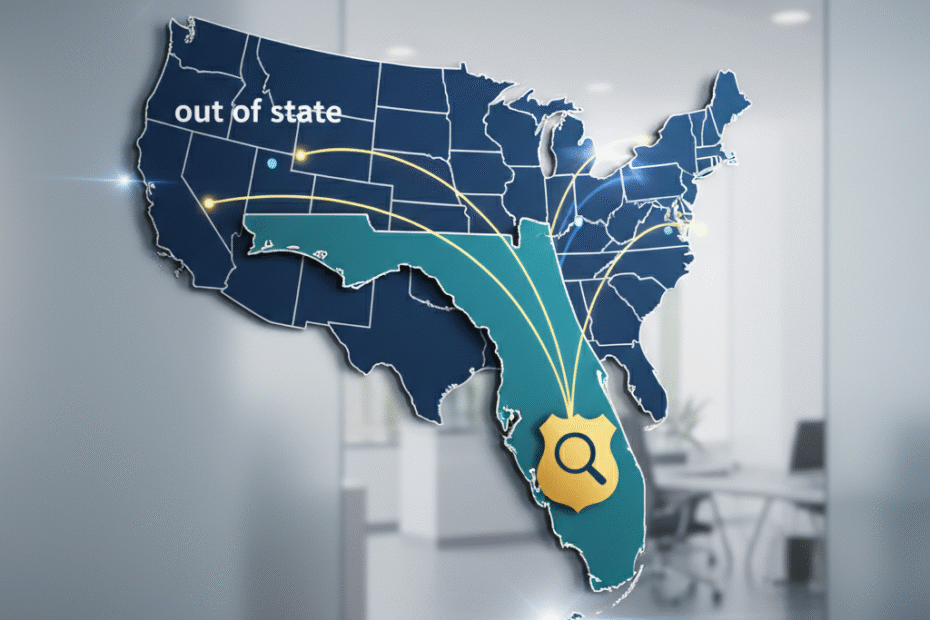
Avoid Licensing Delays: How to Use private investigator license reciprocity florida out of state Safely
Target problem: Many aspiring investigators who are not former police officers want to work cases in Florida but misunderstand reciprocity rules. Be careful not to assume reciprocity equals permanent licensure — that assumption causes costly delays, fines, and lost clients. This guide focuses on practical, actionable tips to avoid licensing mistakes and errors when navigating private investigator license reciprocity florida out of state. You’ll get step-by-step do’s and don’ts, real scenarios, and severity ratings so you can act with confidence in Florida’s market.
Tip #1: Verify whether your home-state license actually qualifies for Florida reciprocity
Why it matters: Reciprocity is limited. Only certain states have agreements that let investigators continue work in Florida if the case started in their home state. Assuming universal reciprocity is a critical mistake that can lead to unlicensed practice.
How to implement: Check the Bureau of Security and Investigative Services reciprocity list and cross-reference with Florida guidelines. If your state appears on lists like California, Georgia, Louisiana, North Carolina, or Oregon, you may have limited permissions — but always confirm with written guidance from Florida regulators before accepting work.
Real example: Steve from Georgia accepted a Florida surveillance job without confirming reciprocity; he later learned he needed to file notification paperwork and paused the case until cleared. (Source: BSIS – Private Investigator Reciprocity.)
Tip #2: Never assume you can solicit or set up a Florida office under reciprocity
Severity: Critical mistake: Soliciting clients or establishing a permanent presence when working under reciprocity risks fines and license revocation.
Why it matters: Reciprocity generally allows you to continue an investigation that originated in your home state — it does NOT let you open a business or solicit Florida clients. Misuse wastes time and harms reputation.
How to implement: Always start Florida work from an out-of-state client and avoid marketing targeted to Florida residents. If you plan to serve Florida clients regularly, pursue full Florida licensure instead of relying on reciprocity.
Real example: Maria, licensed in Oregon, accepted local leads after a short assignment and was told reciprocity didn’t cover solicitation; she then applied for the Florida exam to legally expand her practice. (See state-by-state guidance: HarborCompliance – PI License by State.)
Tip #3: File required notifications and respect time limits before you start work

Why it matters: Some states require a notification or temporary filing to perform investigative activities. Failing to file can be an avoidable administrative error that costs you weeks of business interruption.
How to implement: Contact Florida’s licensing authority or consult official instructions to determine if a notification is needed. Track any time limits (often around 30 days) and document all filings and approvals before conducting surveillance or interviews in Florida.
Real example: An out-of-state investigator who filed a notification form before entering Florida avoided a stop-work order after a short compliance check. (General guidance: Eldorado Insurance – Crossing State Lines.)
Tip #4: Avoid assuming reciprocity waives Florida’s licensing standards
Severity: Common but fixable: Confusing temporary permission with full licensure leads to long-term limits on your career in Florida.
Why it matters: Reciprocity does not replace Florida’s age, experience, exam, and background-check requirements for permanent licensure. Relying on reciprocity long-term prevents you from building a stable Florida-based business.
How to implement: If you intend to make Florida your base, begin the Florida PI license process immediately: prepare documentation of experience, schedule the Florida-specific exam, and complete fingerprint/background checks required by FDACS.
Real example: After three temporary assignments, David realized he couldn’t hire staff or rent office space without a Florida license and began the full licensure process to scale responsibly.
Tip #5: Be careful about firearm carry and weapons rules across state lines
Why it matters: Weapons reciprocity is separate from PI licensing. Carrying a firearm or using weapons in Florida without the correct permits is a legal trap that can carry criminal penalties.
How to implement: Verify weapon-carry reciprocity independently and comply with Florida’s gun laws. If firearms are part of your work, consult an attorney and confirm you hold the proper multi-state permits before crossing state lines.
Real example: An investigator drove into Florida with a concealed permit valid in his home state, but local interpretation required separate documentation — he put weapons in secured storage and completed the job unarmed to avoid legal exposure.
Tip #6: Avoid vague contracts — use clear scope-of-work clauses tied to origin state work
Why it matters: Contracts that don’t state the investigation’s origin create liability: Florida regulators expect reciprocal work to stem from the home state, and ambiguous contracts can look like soliciting Florida business.
How to implement: Draft engagement letters that explicitly state where the investigation originated, client residency, and the expected duration of Florida activities. Keep records showing the case began outside Florida.
Real example: A contractor’s contract omitted the origin clause; when questioned, the investigator produced emails proving origin and avoided sanctions. Proper contract language prevented escalation.
Tip #7: Don’t neglect documentation and quick corrective action if you slip up
Severity: High if unaddressed: Small oversights become regulatory headaches if you can’t prove compliance.
Why it matters: Regulators and clients expect paper trails. If you mistakenly start work without filing, immediate corrective steps reduce penalties and demonstrate good faith.
How to implement: Keep dated logs, copies of licenses, notification receipts, and emails. If you realize an error, stop work, contact Florida authorities, file required forms, and notify the client with a corrective plan.
Real example: After beginning a surveillance day without realizing a notification was due, one investigator paused, filed the form the same afternoon, and documented the delay — regulators accepted the cure and issued no fine.
Tip #8: Instead of guessing, consult official sources and specialist counsel early
Why it matters: Guesswork fuels errors to avoid; using official guidance prevents wasted time and helps you grow legally in Florida.
How to implement: Use the official state resources and reputable compliance guides to confirm rules. For complex scenarios (multi-state clients, firearms, or permanent moves), consult a licensing specialist or attorney.
Real example: A private investigator who consulted a licensing attorney before accepting multi-state surveillance saved thousands by following a compliant plan rather than retrofitting a noncompliant approach. (Guides: HarborCompliance, Eldorado Insurance.)
Next Steps to Avoid Licensing Delays and Errors
Recap: Avoid these private investigator license reciprocity florida out of state mistakes by confirming your home-state eligibility, never soliciting Florida business under temporary reciprocity, filing required notifications, and preparing to pursue full Florida licensure if you plan to stay. Watch out for weapons rules, keep airtight contracts, document everything, and seek specialist advice when unsure. These steps directly address the most common pitfalls in private investigator license reciprocity florida out of state and help you move from accidental noncompliance to professional growth.
It’s okay if you’ve already made one of these errors — fix it quickly by stopping work, documenting the issue, filing any late notifications, and starting Florida licensure if your long-term plan includes the state. Avoid private investigator license reciprocity florida out of state mistakes and you’ll protect your reputation, save money, and unlock Florida’s opportunities.